How to Build Solid Wood Furniture (and Know When to Buy Instead)
If you’ve been eyeing up a DIY project, you’ve probably realised that learning how to build solid wood furniture isn’t just about cutting boards and screwing them together. Real wood moves, joinery matters, and one small measuring mistake can turn expensive timber into firewood. At the same time, understanding the build process is exactly what helps you judge whether a finished piece is genuinely well made—especially for high-use items like chairs.
This guide walks through the core steps used in quality furniture making (the same principles behind well-built, handcrafted pieces), so you can decide: is this a satisfying DIY build, or is it a job better left to an experienced maker?
Start with the right project (chairs are a brave first build)
If your end goal is a chair, it’s worth knowing upfront: chairs are one of the hardest pieces of furniture to build well. They need to be rigid in every direction, comfortable at the right angles, and strong enough to handle years of daily movement—people tipping back, dragging them across the floor, leaning on one arm, kids climbing up.
A more forgiving first project is a simple side table, bench, or a basic stool. Those builds still teach you accurate measuring, squaring, sanding, and finishing—without the same structural complexity.
If you do want to build a chair, keep the design simple: straight legs, a solid seat, and a back with minimal curves. Curves look beautiful, but they add jigs, templates, and a lot more time.
Real-home perspective: a dining chair has to work in the messy reality of life—pulled in and out daily, wiped down after dinner, occasionally bumped by a hoover. The build needs to be practical as well as pretty.
Choosing timber: what ‘solid wood’ really means
“Solid wood” should mean the structural parts are made from real timber rather than MDF, chipboard, or a thin veneer over an engineered core. For DIY solid wood furniture, the timber choice affects everything: stability, workability, weight, and how it finishes.
A few practical pointers:
• Moisture content matters. Furniture timber should be dry and acclimatised, otherwise it can shrink, cup, or split after you build. If you buy timber, store it indoors for at least a week (often longer) so it adjusts to your home.
• Grain direction affects strength. Legs and rails should use straight, strong grain where possible. Wild grain looks gorgeous on a panel, but it’s not always ideal for slender structural parts.
• Hardwood vs softwood. Softwoods can work for rustic pieces, but hardwoods generally cope better with knocks and daily use.
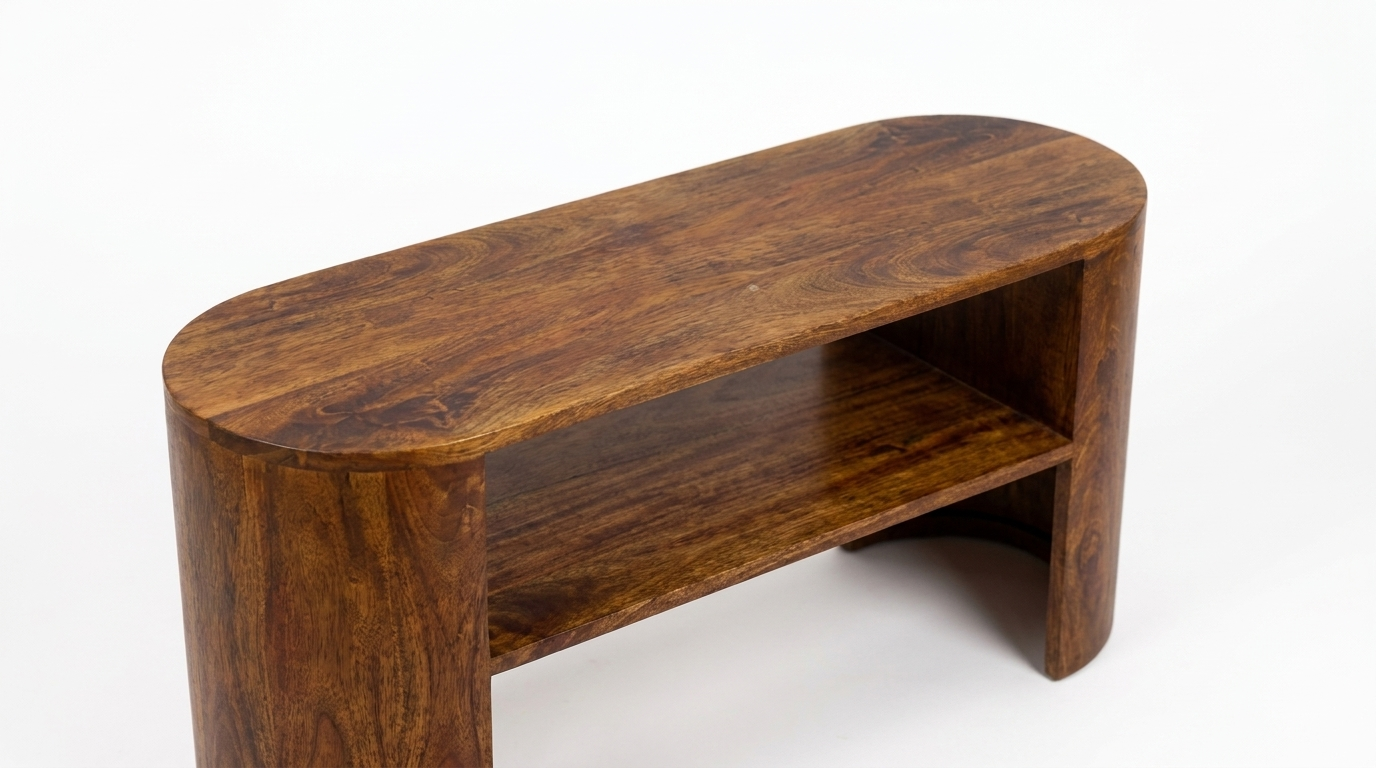
Mango wood sits firmly in the “hardwood that suits real life” camp: it’s strong, characterful, and tends to show warm grain variation that brings a room to life. It’s also one of those woods where a clear finish can look rich without feeling overly formal.
Buying tip: if you’re shopping for finished pieces, ask yourself whether the bits that take the strain (legs, frames, rails) are truly solid wood, and whether the grain and joinery look consistent with careful construction.
How to build solid wood furniture: the core steps makers follow
Whether you’re building furniture from real wood at home or assessing a handcrafted piece, the process is broadly the same. The difference is that experienced makers have jigs, repeatable setups, and a feel for wood movement.
1) Design and measurements
Start with a drawing and a cut list. For a chair, you also need ergonomics: seat height, seat depth, back angle, and the relationship between the rear legs and the back support.
2) Break down and prepare the timber
Rough timber is cut oversize, then brought to final dimensions after it’s flat and square. This stage is where a lot of DIY projects go wrong: if your components aren’t square, joints won’t close cleanly.
3) Joinery (strength comes from the joint, not the glue)
Quality furniture relies on joinery that resists racking (side-to-side movement). Screws have their place, but a chair held together mainly by screws will often loosen over time.
4) Dry fit
Assemble without glue first. Check for twist, rocking, gaps, and alignment.
5) Glue-up and clamping
Use clamps to pull joints tight without distorting the frame. Wipe away squeeze-out before it cures.
6) Sanding
Work through grits gradually. Rushing sanding is the fastest way to end up with a finish that looks patchy or rough in certain light.
7) Finishing
A good finish protects the wood and brings out the grain without looking plastic. More on that below.
8) Final assembly and levelling
Chairs and tables often need final levelling so they sit solidly on real floors (which are rarely perfectly flat).
If that sounds like a lot, it’s because it is—especially on pieces that get used every day. But understanding these stages makes you a much smarter buyer, even if you never pick up a plane.
Joinery that makes furniture last (especially chairs)
If you want one thing to focus on—either as a maker or a buyer—make it joinery. A chair is basically a frame designed to resist wobble for years, and the joint choice is the difference between “solid” and “shaky in six months”.
Common strong joints you’ll see in quality furniture:
• Mortise and tenon: a classic for chair frames and rails. It’s mechanically strong even before glue.
• Dowels (done well): multiple dowels with accurate alignment can be strong, though precision is key.
• Bridle joints / housed joints: often used where you want more glue surface and good alignment.
What to look for when buying:
• Tight, clean connections where rails meet legs (no gaps, no filler).
• Cross rails and stretchers where they make sense. A minimal look can still be strong, but the structure should feel deliberate rather than underbuilt.
• No reliance on corner blocks and screws alone for major load points.
Real-home example: if you’ve ever had a dining chair that slowly develops a wobble, that’s usually joinery loosening under repeated movement. Well-designed joints reduce that movement in the first place.
Sanding and finishing: where DIY often looks ‘homemade’
Even if your build is structurally sound, the finish is what your hands (and eyes) experience every day. It’s also what separates a piece that looks considered from one that looks rough around the edges.
Sanding tips that make a visible difference:
• Break edges gently. Furniture shouldn’t feel sharp. A small chamfer or round-over makes pieces nicer to live with and reduces edge chipping.
• Sand with the grain, and check under raking light. What looks fine head-on can show scratches when sunlight hits from the side.
Finishing options (and how they feel in a home):
• Hardwax oil: popular for a natural, low-sheen look that still offers practical protection. Great if you like a “you can feel the wood” finish.
• Oil finishes: warm and natural, though some need more ongoing care.
• Lacquer/varnish: can be very durable, but the look varies from natural to more sealed depending on sheen and build.
For mango wood in particular, a well-chosen finish can highlight that warm, varied grain without making it look glossy or artificial.
Buying tip: run your hand under the edge of a tabletop or along the underside of a chair seat. High-quality pieces are usually finished thoughtfully even where you don’t immediately look.
Tools and skills: what you really need for DIY solid wood furniture
A lot of frustration comes from trying to build with the wrong tools—or expecting bargain tools to give fine-furniture accuracy. You don’t need a full workshop, but you do need a way to cut accurately, drill square, and clamp reliably.
Helpful basics for building furniture from real wood:
• A reliable saw setup (circular saw with a guide can work; a table saw makes repeatable cuts easier)
• A drill/driver and quality bits
• Clamps—more than you think
• Measuring and marking tools you trust (square, tape, marking knife)
• Sanding setup (random orbital sander plus hand sanding)
For chairs specifically, accurate angled cuts and repeatability are the challenge. That’s where jigs, templates, and experience save a lot of wasted time.
A practical way to decide: if you want a calm, enjoyable project, choose a simpler build first. If you love the challenge and don’t mind a learning curve, a chair can be deeply satisfying—but expect prototypes and adjustments.
When it’s worth buying: how to spot quality (and avoid disappointment)
DIY can be brilliant. But there are times when buying makes more sense—particularly when you want a set of matching chairs, or you want something that will stay solid through daily use.
It’s often worth buying if:
• You need multiple identical pieces (like 4–8 dining chairs) that feel consistent in height and sturdiness.
• You don’t want to invest in specialist tools, jigs, or the trial-and-error stage.
• You care about refined details: balanced proportions, crisp joints, a finish that looks even in daylight.
• You want long-term value: something that wears in gracefully rather than falling apart.
What to look for before you buy:
• Stability: does it feel rigid when you gently twist it?
• Proportions: does it look visually balanced, not top-heavy or spindly?
• Material honesty: real wood surfaces where it matters, not just a wood look.
• Thoughtful finishing: smooth touch points, eased edges, and a finish that suits real life.
If you love the warmth and character of natural timber, solid mango wood is a lovely choice for lived-in homes: it brings grain and depth to a room in a way flat, mass-produced materials rarely do.
If you’re browsing for chairs with that grounded, grown-up feel, Grain and Loom’s collection is a good reference point for what careful craftsmanship and solid wood presence look like in a finished piece.
Conclusion
Knowing how to build solid wood furniture helps whether you’re keen to make something yourself or simply want to buy once and live with it for years. When you understand timber choice, joinery, sanding, and finishing, it becomes much easier to spot the difference between a chair that will stay solid and one that will start wobbling after a season of everyday use.
If you’d like to see what those construction principles look like in real homes—warm grain, durable materials, and that calm, considered feel—explore our handcrafted solid mango wood furniture collection.