

Article: When to Buy Living Room Furniture: A Calm, Practical Guide to Timing It Right
When to Buy Living Room Furniture: A Calm, Practical Guide to Timing It Right
Buying living room furniture can feel oddly high-stakes: you want something that looks right, fits real life, and won’t start wobbling or looking tired after one busy season. The hard part is timing. When to buy living room furniture isn’t only about finding a deal—it’s also about getting the best selection, making sure pieces arrive when you need them, and choosing materials that will age well in a real home (kids, pets, movie nights and all). This guide walks through the most practical times of year to shop, how to plan around your own schedule, and what to prioritize so you can buy once—and feel good about it.
Start with the “why now?”: timing matters more than most people think
A lot of rushed furniture purchases happen for the same reasons: a move-in date, a new baby, a suddenly-too-small sofa, or the realization that your living room has become a catch-all instead of a place to actually unwind.
Before you look at calendars and holiday sales, get clear on what’s driving the purchase:
- A functional problem: not enough storage, no surface space for drinks, cords everywhere, nowhere to stash throws and toys.
- A comfort problem: seating that’s too stiff, too deep, too small, or too worn down.
- A layout problem: the room doesn’t flow, the TV is awkward, the “walkway” cuts through the seating area.
- A style problem: the room feels flat or temporary—especially common with disposable veneer pieces that chip or swell.
Once you name the real reason, it gets easier to decide what you should buy first (often a coffee table, media console, or storage piece), and how quickly you need it. That clarity prevents impulse buys that don’t fit your space—or your life.
When to buy living room furniture: the best times of year (and why)
If your goal is the best mix of value, selection, and realistic delivery timing, a few windows tend to work especially well in the US. The “best time” depends on whether you’re prioritizing price, choice, or schedule.
1) Late winter (January–February): reset season
After the holidays, many people reevaluate their spaces. It can be a great time to shop if you want a calmer browsing experience, and you’re thinking about refreshing the room before spring hosting. You may also find promotional events as retailers clear seasonal merchandising.
2) Spring (March–May): pre-move and pre-hosting momentum
Spring is when homes start getting used differently—more visitors, more daylight showing what’s worn, more motivation to get organized. This is a smart time to buy pieces that make daily living easier, like a media console that hides cables or a coffee table that can handle real use.
3) Summer (July–August): move season planning
Moves and home transitions peak in summer. If you’re furnishing a new place, shopping early in the season gives you time for measuring, deciding, and coordinating delivery before the back-to-school rush.
4) Early fall (September–October): settle-in season
This is an underrated time to invest. Life tends to stabilize a bit, and you can set your living room up for the months when it gets the most use. Buying in early fall means you’re not scrambling right before the holidays.
5) Holiday promo windows (late November): deal-focused, but not always low-stress
If you’re strictly price-driven, the late-November period can be attractive. Just keep expectations realistic: popular dimensions and finishes can go quickly, and shipping calendars get tight.
A quick note on the secondary keyword you may have seen online: people sometimes search for seasonal furniture sales UK, but US timing and promo patterns aren’t identical. Use UK sale chatter as a rough reference, not a rule book for American retailers.
Plan around real-life deadlines (delivery windows, hosting, and renovations)
The biggest “timing” mistake isn’t shopping in the wrong month—it’s shopping too close to your deadline.
If you’re upgrading your living room before a life moment (hosting family, a move, a renovation finishing), give yourself planning room for:
- Measuring and layout testing: tape outlines on the floor, confirm walking paths, check door swings.
- Decision fatigue: it takes time to choose proportions, finishes, and storage needs.
- Coordinating the room: a new sofa might come later, but you can anchor the space with the right tables or console now.
A practical way to work backwards:
- If you have a hard deadline (Thanksgiving hosting, for example), aim to finalize key purchases well ahead so you’re not forced into whatever is available last-minute.
- If you’re moving, consider buying foundational pieces after you’ve confirmed the new room dimensions. A media console that’s perfect in one place can feel oddly small—or block a walkway—in another.
Real-world example: In a typical American open-plan living room, a media console often does more than hold a TV. It’s cable control, hidden storage, a visual “base” that makes the wall feel finished, and sometimes the boundary line between living and dining. That’s a piece worth planning, not rushing.
What to decide before you buy (so you don’t re-buy in a year)
If you’re tired of furniture that feels temporary, your checklist needs to go beyond “does it look good online?” Here’s what to lock in before you hit purchase.
1) Your room’s anchor and traffic flow
Decide what the room is centered around: conversation, the TV, the fireplace, or a mix. Then protect the walking paths. A beautiful coffee table that forces people to sidestep around it will always feel slightly wrong.
2) The problem you’re solving: surface, storage, or softness
- Need a landing zone for everyday life? Prioritize a coffee table with a usable top.
- Need calm? Prioritize closed storage (drawers or cabinets) to hide visual clutter.
- Need flexibility? Consider nesting tables or a smaller-scale table paired with an accent table.
3) Material reality (especially if you’ve been burned before)
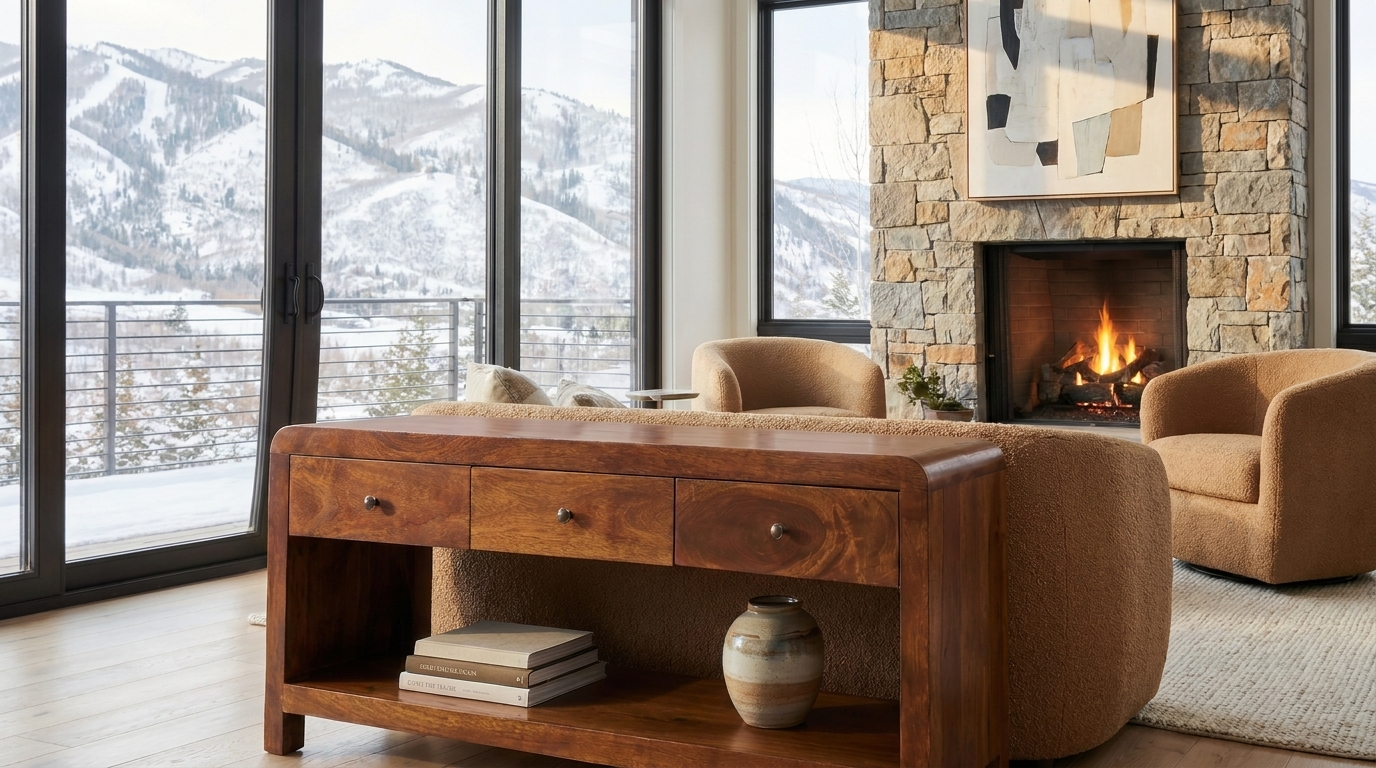
If you’ve dealt with peeling finishes, swollen edges, or wobbly joints, it’s worth paying attention to construction and material. Solid wood pieces—like solid mango wood—tend to bring a warmer, more substantial feel, and they can handle the day-to-day better than flimsy composites. You’ll also get natural grain variation that adds depth, especially in homes with warm neutrals, textured rugs, and layered lighting.
4) Proportion and height
A common mistake is choosing living room tables that are too tall, too small, or too visually heavy. If your sofa is low and modern, a chunky, tall table can fight it. If your seating is more traditional, a tiny table can look lost.
Think of it this way: good furniture makes the room feel effortless. Bad proportion makes even a nice room feel slightly uncomfortable.
Timing your purchase with style trends—without getting stuck in a “trend cycle”
Trends are useful for inspiration, but they’re not a great reason to buy. The living room is a high-use space; you want the foundational pieces to feel timeless and to work with how you actually live.
A more practical approach is to buy the long-term shapes and materials, then refresh the rest.
What tends to age well:
- Warm woods with visible grain
- Simple, well-proportioned silhouettes
- Practical storage that doesn’t shout for attention
- Neutral upholstery and rugs with texture (not too precious)
What to update later instead of “locking in”:
- Pillows and throws
- Lighting (a floor lamp can change everything)
- Art and styling
Real-world example: If your living room leans Japandi or Scandinavian, a clean-lined wood console plus a softer rug and linen curtains can feel calm and grown-up. If your home is more farmhouse modern or rustic modern, the same wood piece can read warmer and more grounded paired with a larger-scale sectional and iron accents. The anchor stays; the styling flexes.
How to get the best value (without chasing the lowest price)
Getting “the best value” doesn’t always mean buying during the biggest promo week. It means buying something you won’t need to replace—and that you’ll enjoy using every day.
A few value signals to watch for:
- Stability and weight: does the piece feel solid and planted, or light and shift-y?
- Joinery and build details: look for thoughtful construction rather than purely decorative design.
- Finish that fits real life: you want a surface that can handle water rings, remote controls, and the occasional kid-related surprise without looking delicate.
- Design versatility: will it still work if you repaint, change rugs, or move to a new home?
If you’re investing in solid wood, you’re also investing in the way it makes a room feel: warmer, more layered, more “collected,” even if the rest of the space is simple.
One of the quiet perks of mango wood is its character—grain movement and tonal shifts that make the surface feel alive, not printed. In a living room that’s otherwise neutral, that natural variation can do a lot of design work on its own.
Conclusion
The best answer to when to buy living room furniture is the moment you can plan calmly: when you’ve measured, clarified the problem you’re solving, and given yourself enough runway for delivery and styling. Seasonal promo windows can help, but long-term satisfaction usually comes from choosing the right proportions, practical storage, and materials that feel good to live with—day after day.
If you’re ready to upgrade from temporary pieces to something warmer and more lasting, explore our handcrafted solid mango wood furniture collection and see what fits your space and pace of life.


